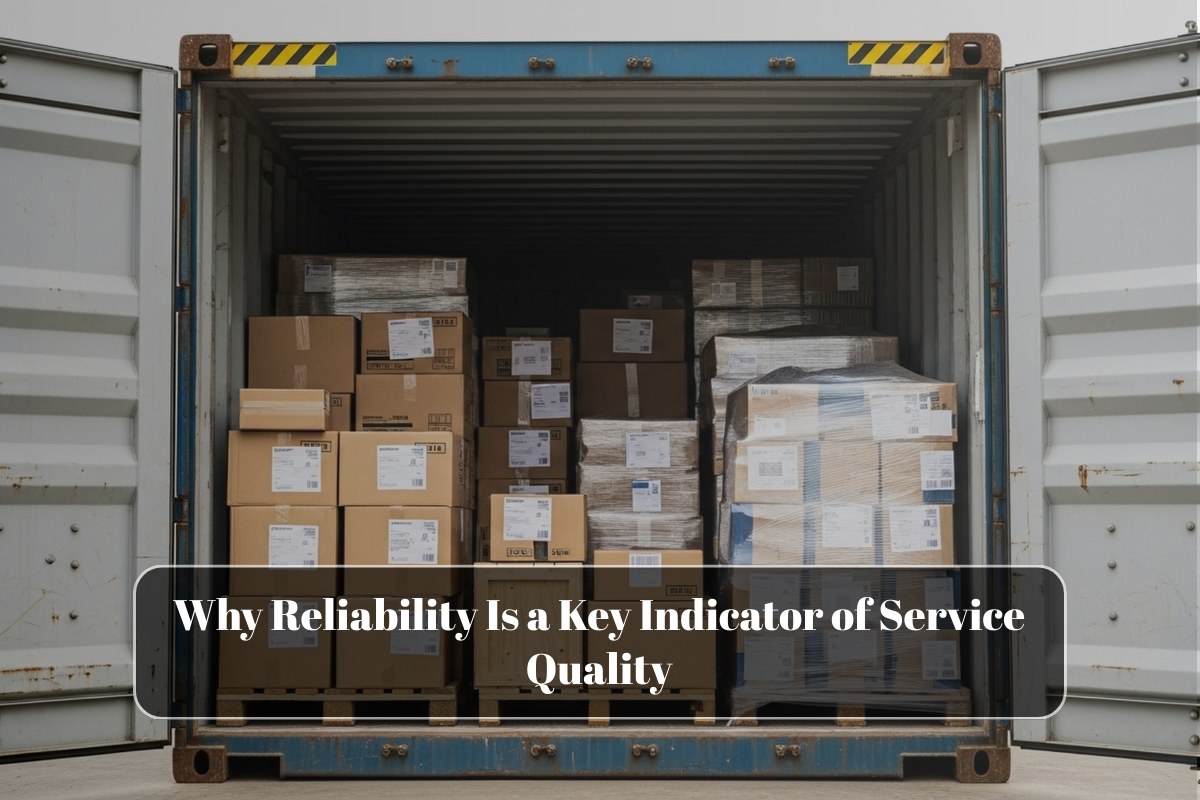
In the freight and logistics industry, trust is not built through promises or pricing alone—it is earned through consistent performance over time. Customers depend ...
In transportation services, innovation, speed, and cost efficiency often dominate strategic discussions. While these factors are important, reliability remains the foundation upon which all ...
Reliability in delivery scheduling forms the backbone of trust in logistics, directly boosting confidence for businesses making firm commitments to clients. When carriers consistently ...
Reliability planning stands essential for time-sensitive freight deliveries in the U.S., where on-time rates average 70-80% but failures cost $1.5 trillion yearly in disruptions. ...
In any organization, errors and rework quietly drain time, money, and morale. Missed steps, inconsistent execution, and unclear processes create inefficiencies that compound as ...
Reliability forms the cornerstone of enduring supply chain partnerships, enabling stakeholders to trust each other in delivering consistent performance amid volatility. From suppliers to ...
Reliability in operations hinges on accountability, where each team member owns their role in preventing failures and driving consistency. Without it, even robust systems ...
Reliability in data and processes serves as the foundation for precise forecasting and informed operational decisions, minimizing errors that cascade into costly missteps. High-quality, ...
Reliability is a key indicator of service quality because customers judge services largely on whether promises are kept consistently, accurately, and on time. When ...
Reliability in logistics—measured by OTIF rates above 95%—directly shapes brand perception, as consistent on-time, in-full deliveries build trust amid fierce competition where 80% of ...