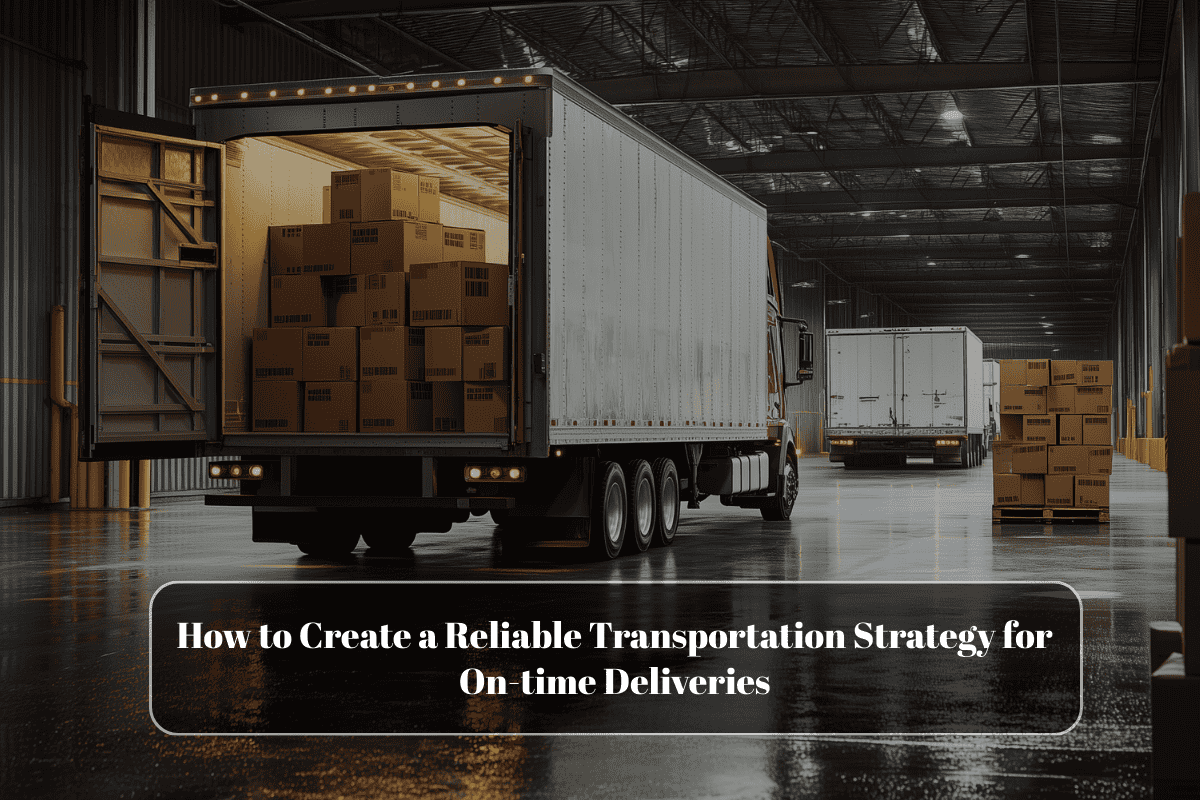
Creating a reliable transportation strategy ensures on-time deliveries, boosting customer satisfaction and operational efficiency for U.S. businesses in competitive markets like e-commerce and manufacturing.
Standardized processes, technology, and contingency planning cut delays by 20-40%, directly impacting repeat business and profitability. From route optimization to carrier partnerships, these steps deliver consistency nationwide.
Assess Current Performance
Start with data: Track on-time delivery (OTD) rates, average transit times, and delay causes using warehouse management systems (WMS) or TMS software. Benchmark against industry standards—95%+ OTD for parcels, 90% for LTL freight. Analyze pain points like peak-season surges in retail hubs (e.g., LA to NYC routes) or weather disruptions in Midwest winters. Set KPIs: OTD >98%, cost per mile under $2.50, and customer NPS above 80.
Optimize Route Planning
Leverage dynamic routing software like Route4Me or Descartes for real-time adjustments factoring traffic, weather, and delivery windows. Group stops by proximity—urban clusters in Chicago vs. rural spreads in Texas—reducing miles 15-25%. Pre-load trucks strategically: heavy items first, sequenced by drop-off. Use historical data for predictive planning, avoiding bottlenecks like I-95 congestion.
Select Reliable Carriers and Modes
Vet partners via scorecards: UPS/FedEx for speed, Old Dominion for LTL reliability (OTD 96%). Diversify—pair ground with air for urgency, rail for bulk Midwest runs. Negotiate volume discounts (10-20% off lane rates) and SLAs guaranteeing 98% OTD with penalties. For last-mile, partner with USPS or Amazon Flex in dense areas; drones/regional hubs cut urban times.
Implement Real-Time Visibility
GPS telematics (Samsara, Geotab) provide ETAs accurate to 15 minutes, alerting drivers to issues like breakdowns. Customer portals share tracking links, reducing inquiries 50%. IoT sensors monitor temp-sensitive freight (pharma/food), ensuring compliance. In U.S. cross-country hauls, visibility prevents 30% of disputes.
Build Capacity and Contingencies
Forecast demand via AI tools (FourKites), scaling fleet or backhauls during holidays. Maintain 10-20% buffer capacity; cross-dock facilities in Atlanta or Dallas speed transfers. Contingencies: Reroute via parallel highways (I-80 vs. I-70), backup carriers, or expedited air for 5% critical loads. Train drivers on ELDs for HOS compliance, avoiding FMCSA violations.
Streamline Warehousing and Last-Mile
Zone picking and automation (sort-to-light) shave fulfillment 20%; wave planning batches orders by route. Last-mile micro-hubs in cities like Seattle consolidate parcels, partnering with gig drivers for flexibility. Returns reverse logistics—80% same-day processing—maintains flow.
Measure and Iterate
Weekly dashboards track OTD, dwell times, and costs; root-cause delays with Six Sigma. Incentives: Bonuses for drivers hitting 98% OTD. Annual audits refine strategies, adapting to fuel spikes or regulations like CARB clean truck rules in California.
FAQs
1. How to calculate OTD rate?
(Deliveries on-time / Total) x 100; aim 95%+.
2. Best routing tools?
Route4Me, Descartes for real-time U.S. optimization.
3. Handle peak seasons?
Buffer capacity, predictive AI, backup carriers.
4. Last-mile cost cutters?
Micro-hubs, gig partnerships in cities.
5. Track improvements?
Dashboards for KPIs; driver incentives boost adherence.