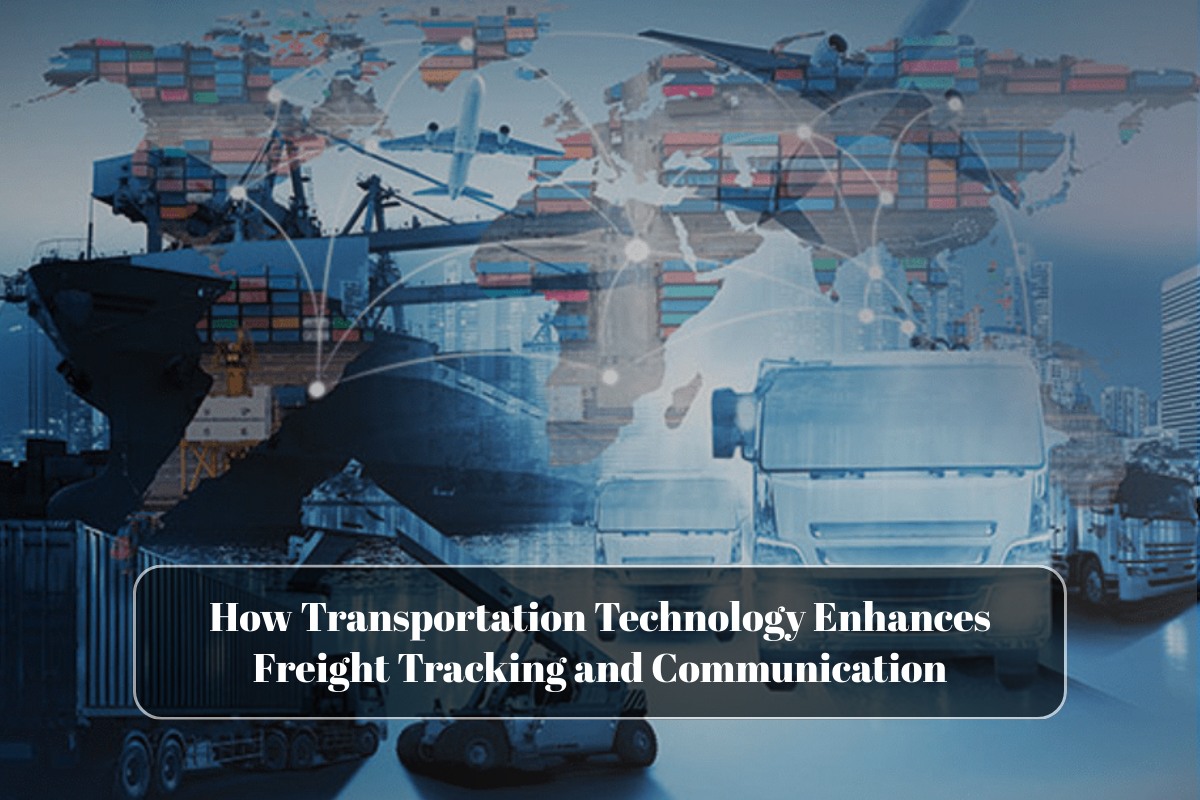
Modern supply chains depend on speed, accuracy, and transparency. As customer expectations rise and logistics networks become more complex, transportation technology has become essential for managing freight efficiently. Advanced tools now allow shippers, carriers, and customers to see where shipments are, communicate instantly, and respond quickly to disruptions.
By enhancing freight tracking and communication, transportation technology improves reliability, reduces costs, and strengthens trust across the entire logistics ecosystem. This article explores how these technologies are transforming freight operations.
Real-Time GPS Tracking Improves Visibility
One of the most impactful advancements in transportation technology is real-time GPS tracking. Instead of relying on manual updates or estimated timelines, logistics teams can now monitor shipments continuously as they move across regions and countries.
Real-time visibility allows companies to know the exact location of a truck, container, or shipment at any moment. This reduces uncertainty and enables proactive decision-making. If delays occur due to traffic, weather, or mechanical issues, teams can adjust routes, update customers, and minimize disruption before problems escalate.
Internet of Things (IoT) Devices Provide Deeper Shipment Insights
Beyond location tracking, Internet of Things (IoT) sensors provide detailed data about shipment conditions. These devices can monitor temperature, humidity, shock, vibration, and even light exposure.
This is especially valuable for sensitive goods such as pharmaceuticals, food, and electronics. Companies can ensure products are transported under the right conditions and receive alerts if something goes wrong. This level of monitoring improves quality control, reduces losses, and strengthens accountability across the supply chain.
Transportation Management Systems (TMS) Streamline Communication
Transportation Management Systems act as centralized platforms for managing freight operations. These systems connect shippers, carriers, drivers, and customers in a single digital environment.
With a TMS, communication becomes faster and more organized. Stakeholders can share updates, documents, schedules, and delivery confirmations without relying on fragmented emails or phone calls. This improves coordination, reduces miscommunication, and helps ensure everyone is working with the same real-time information.
Automated Notifications Enhance Customer Experience
Customers increasingly expect transparency around their deliveries. Transportation technology supports this through automated notifications that provide updates at key stages of the shipping process.
Instead of waiting for manual status checks, customers can receive alerts when shipments are dispatched, delayed, approaching delivery, or successfully delivered. This improves trust and satisfaction while reducing the burden on customer service teams who would otherwise handle frequent tracking inquiries.
Predictive Analytics Support Smarter Decision-Making
Modern transportation platforms use data analytics and artificial intelligence to move beyond tracking and into prediction. By analyzing historical and real-time data, these systems can anticipate potential disruptions before they occur.
Predictive analytics can forecast delivery delays, identify high-risk routes, optimize scheduling, and suggest alternative options. This allows logistics teams to plan more strategically rather than simply reacting to problems as they arise.
Mobile Technology Strengthens Driver Communication
Mobile apps designed for drivers have transformed communication on the road. Drivers can now receive updated routes, delivery instructions, and real-time messages directly on their devices.
They can also upload proof of delivery, photos, signatures, and status updates instantly. This eliminates paperwork delays and ensures that information flows smoothly between drivers, dispatchers, and customers. Stronger driver communication leads to greater accuracy and faster issue resolution.
Cloud-Based Platforms Improve Collaboration
Cloud technology enables multiple stakeholders to access the same data from anywhere in the world. Shippers, carriers, warehouses, and customers can collaborate more effectively because information is no longer siloed within individual systems.
This shared visibility supports stronger partnerships, better coordination, and faster decision-making. It also allows companies to scale operations more easily without heavy infrastructure investments.
Increased Transparency Builds Trust and Accountability
Perhaps the most important impact of transportation technology is the transparency it creates. When all parties can see what is happening in real time, trust improves.
Customers feel more confident when they can track shipments. Businesses benefit from clearer performance data. Carriers gain credibility through consistent, visible service. This transparency encourages accountability at every level and drives continuous improvement throughout the logistics process.
Frequently Asked Questions
How does transportation technology improve freight tracking?
It uses tools like GPS, IoT sensors, and real-time platforms to provide continuous visibility into shipment location and condition.
What role does a Transportation Management System play in communication?
A TMS centralizes communication, allowing all stakeholders to share updates, documents, and tracking information in one organized system.
Can technology help prevent delivery delays?
Yes. Predictive analytics and real-time tracking allow teams to identify potential issues early and make proactive adjustments.
How do customers benefit from improved freight communication?
Customers receive timely updates, clearer delivery expectations, and greater transparency, which improves trust and satisfaction.
Is transportation technology only useful for large companies?
No. Many scalable solutions are available for small and mid-sized businesses, allowing organizations of all sizes to benefit from improved tracking and communication.
Does better tracking reduce overall logistics costs?
Yes. Improved visibility and communication help reduce errors, minimize delays, prevent losses, and optimize routes, all of which contribute to cost savings over time.