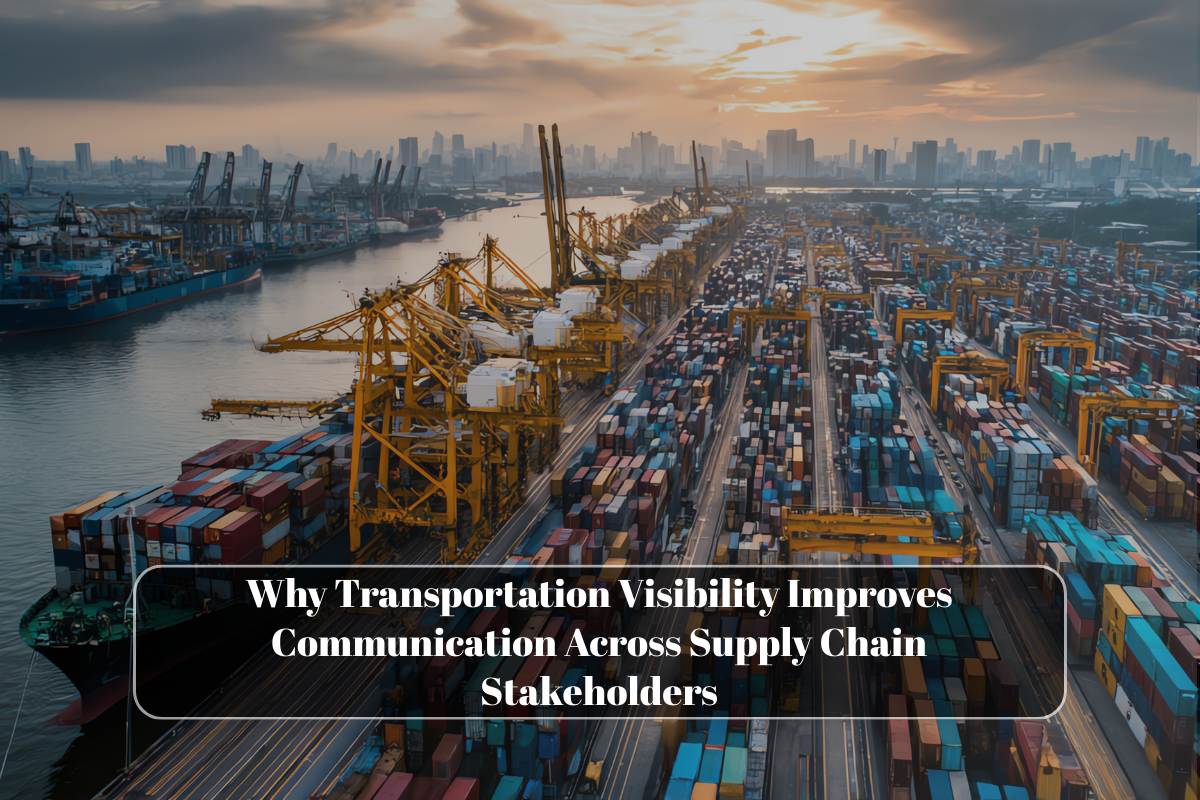
Transportation visibility provides real-time tracking and data sharing across shipments, enabling seamless communication among suppliers, carriers, shippers, and customers via unified platforms that reduce manual calls by 80%. Without it, fragmented updates cause delays and disputes; with visibility, stakeholders collaborate proactively, cutting resolution times 40% and boosting OTIF rates. In complex networks, this transparency turns silos into synchronized operations, vital for 2025’s volatile markets.
Real-Time Data as Communication Foundation
GPS, IoT, and AI-powered ETAs deliver precise location, status, and milestone updates, shared instantly through dashboards and APIs. Suppliers see production impacts from delays; carriers share capacity; customers track orders—eliminating “where is my shipment?” queries.
Cloud platforms foster shared truth, with customizable alerts notifying delays proactively, enhancing trust across ecosystems.
Breaking Down Silos for Collaborative Decisions
Visibility platforms integrate ERP/WMS/TMS, allowing cross-stakeholder views: automotive OEMs used portals for forecasts, cutting defects 15% via aligned communication. Carriers report ETAs directly, enabling rerouting before issues escalate.
Multi-party access—suppliers monitoring inbound, retailers checking stock—streamlines handoffs, as cloud scheduling synced brokers/warehouses, eliminating spreadsheets.
Proactive Issue Resolution and Risk Sharing
Anomaly detection flags delays early; collaborative tools enable joint mitigation, like lane-sharing during shortages. Retailers share container data pre-port, planning arrivals precisely.
ETA accuracy >95% via AI reduces surprises, fostering agility; notifications cut check-calls 80%, freeing teams for strategy.
Enhanced Customer Experience and Loyalty
End-to-end portals empower customers with self-service tracking, building satisfaction; real-time ETAs set expectations accurately. Transparent updates turn potential complaints into trust-builders.
Operational Efficiency from Unified Insights
Standardized data exchange optimizes routes, inventory; 3M used visibility for N95 prioritization amid COVID, ensuring timely global delivery.
Case Studies of Visibility-Driven Collaboration
LovelySkin integrated NetSuite for 300% order spikes without stockouts, via real-time vendor coordination. Monterrey-Laredo plant used cloud scheduling for broker visibility, ensuring accountability.
SAP-TMS at Amrit Cement unified 22 units, slashing delays via transparent freight data.
Implementation for Stakeholder Alignment
Start with high-impact lanes, integrate APIs, train on portals; mature ecosystems yield 20-30% efficiency.
FAQs
Q. How does visibility reduce manual communication?
Real-time dashboards/APIs replace calls/emails; cuts check-ins 80% via automated alerts.
Q. Why suppliers benefit from transport tracking?
Inbound ETAs align production, mitigating stockouts via proactive planning.
Q. What role AI ETAs in stakeholder sync?
95% accuracy enables joint rerouting, avoiding delays collaboratively.
Q. Real case of visibility improving handoffs?
Cloud scheduling linked brokers/warehouses, eliminating spreadsheets for precise arrivals.
Q. ROI from unified platforms?
40% faster resolutions, 15% defect cuts via aligned forecasts/quality shares.