In today’s interconnected supply chains, logistics performance is no longer driven by individual companies operating in isolation. Instead, it depends on how well businesses collaborate with their vendors, carriers, and service partners.
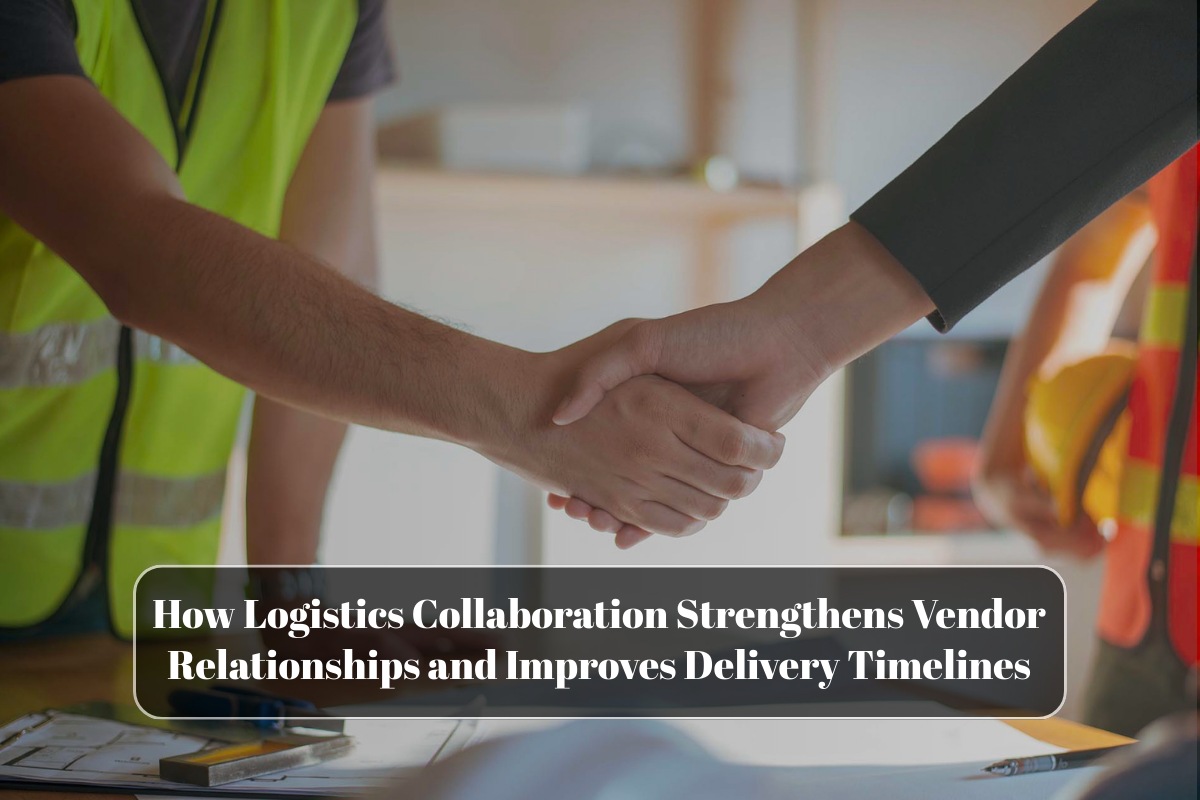
Logistics collaboration—defined as the coordinated planning, execution, and communication between supply chain partners—plays a vital role in strengthening vendor relationships and improving delivery timelines. When collaboration is intentional and consistent, it transforms logistics from a transactional function into a strategic partnership.
Understanding Logistics Collaboration
Logistics collaboration involves sharing information, aligning goals, and coordinating activities across organizations involved in moving goods. Rather than focusing solely on contractual obligations, collaborative logistics emphasizes mutual success, transparency, and long-term value.
This approach enables vendors and customers to work together on forecasting, transportation planning, inventory management, and problem resolution. The result is a more resilient and responsive supply chain.
Building Trust Through Transparency
Strong vendor relationships are built on trust, and trust is reinforced through transparency. Logistics collaboration encourages open sharing of data such as demand forecasts, inventory levels, shipment status, and capacity constraints.
When vendors understand upcoming needs and potential challenges, they can plan more effectively. This openness reduces surprises, prevents last-minute changes, and fosters confidence that both sides are working toward shared objectives.
Aligning Expectations and Performance Standards
Delivery delays often stem from misaligned expectations. Collaboration allows both parties to clearly define service levels, delivery windows, escalation procedures, and performance metrics.
When expectations are aligned, vendors know exactly what success looks like and how performance will be measured. This clarity reduces misunderstandings and creates a shared commitment to meeting delivery timelines consistently.
Improving Planning and Forecast Accuracy
Collaborative logistics improves planning accuracy by combining insights from both sides of the relationship. Vendors contribute operational knowledge and capacity insights, while customers provide demand signals and market intelligence.
This joint planning approach leads to:
- More accurate forecasts
- Better production and transportation scheduling
- Reduced last-minute expediting
Improved planning directly supports on-time delivery by minimizing avoidable disruptions.
Enhancing Coordination Across Transportation Stages
Delivery timelines are influenced by multiple handoffs—from production and pickup to line haul and final delivery. Logistics collaboration ensures that each stage is coordinated rather than siloed.
Shared schedules, synchronized handoffs, and advance notifications allow vendors to prepare resources in advance. This coordination reduces dwell time, missed pickups, and cascading delays that disrupt delivery performance.
Faster Issue Resolution and Proactive Problem-Solving
No supply chain is immune to disruption. Weather events, capacity shortages, and operational breakdowns will occur. Collaborative logistics relationships improve how quickly and effectively these issues are resolved.
When vendors and customers communicate regularly and trust one another, problems are addressed proactively rather than defensively. Early warnings, joint contingency planning, and shared accountability help protect delivery timelines even when conditions change.
Encouraging Continuous Improvement
Collaboration shifts the focus from blame to improvement. Instead of reacting to late deliveries after the fact, collaborative partners analyze root causes together and implement corrective actions.
Regular performance reviews, shared data analysis, and joint improvement initiatives strengthen processes over time. As reliability improves, delivery timelines become more predictable and consistent.
Strengthening Vendor Commitment and Loyalty
Vendors are more likely to prioritize customers who treat them as partners rather than interchangeable service providers. Collaborative relationships foster loyalty, which can translate into better service during peak demand or constrained capacity.
Strong vendor commitment often results in:
- Priority scheduling
- Greater flexibility
- Willingness to invest in joint solutions
These benefits directly support improved delivery performance.
Reducing Costs That Impact Timelines
Poor collaboration often leads to inefficiencies such as rework, expedited shipping, excess inventory, and missed delivery windows. These costs also disrupt schedules and create downstream delays.
Collaborative logistics reduces these inefficiencies by improving planning accuracy and execution reliability. As costs decline, resources can be reinvested into systems and processes that further improve delivery speed and consistency.
Supporting Scalability and Growth
As businesses grow, logistics complexity increases. Collaborative vendor relationships provide the flexibility needed to scale operations without sacrificing delivery performance.
Vendors who are engaged early in growth plans can adjust capacity, infrastructure, and staffing to support expansion. This alignment helps maintain delivery timelines even as volume and geographic reach increase.
Creating Long-Term Competitive Advantage
Reliable delivery is a powerful differentiator. Logistics collaboration strengthens vendor relationships in ways that competitors may find difficult to replicate.
When vendors are aligned with your goals and invested in your success, the entire supply chain becomes more agile, dependable, and customer-focused. This reliability enhances brand reputation and customer satisfaction over the long term.
Frequently Asked Questions (FAQ)
Q. What is logistics collaboration in simple terms
It is the practice of working closely with vendors and partners to plan, communicate, and execute logistics activities together.
Q. How does collaboration improve delivery timelines
By improving planning accuracy, communication, coordination, and faster response to disruptions.
Q. Is logistics collaboration only for large companies
No. Businesses of all sizes benefit from stronger vendor relationships and shared planning.
Q. Does collaboration require advanced technology
Technology helps, but collaboration can begin with regular communication, shared goals, and transparency.
Q. Can collaboration really improve vendor relationships
Yes. Collaboration builds trust, loyalty, and mutual accountability, strengthening relationships over time.