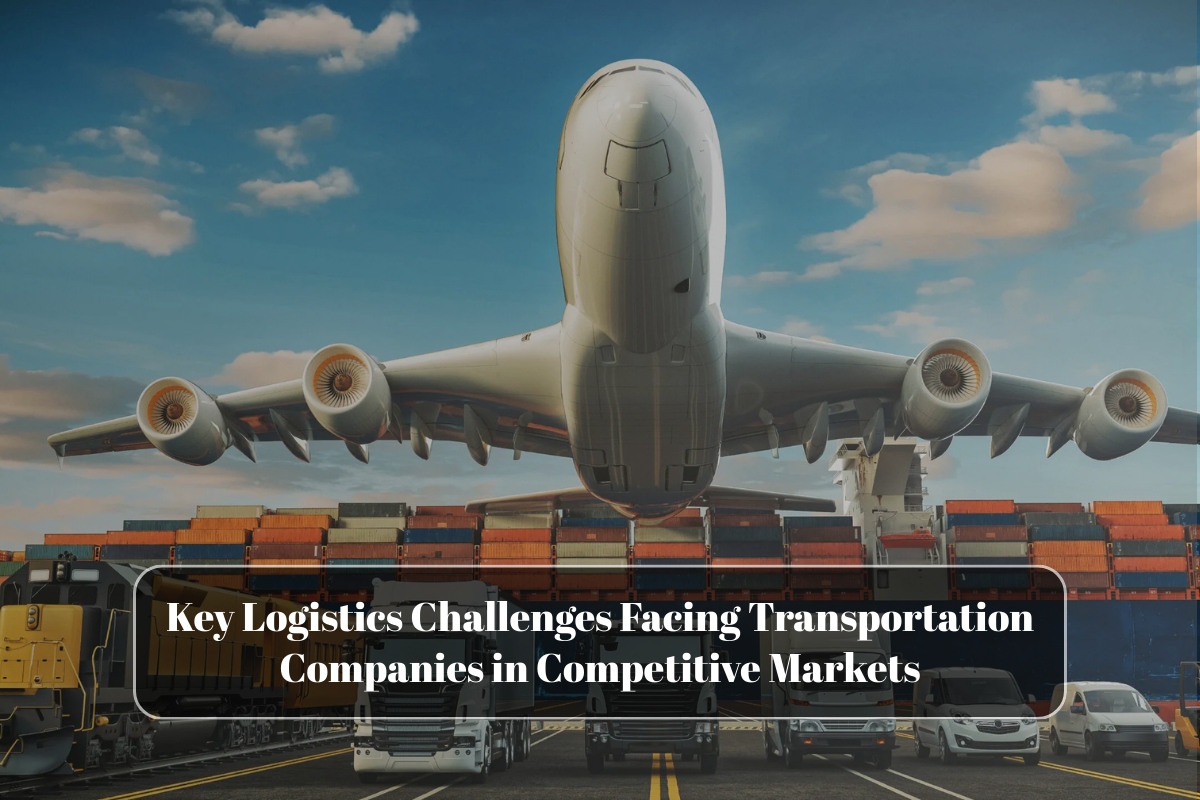
Transportation companies operate at the heart of global commerce, yet today’s environment is more demanding than ever. Competitive pressure, rising customer expectations, technological disruption, and external uncertainty are reshaping how logistics providers must operate.
Success is no longer defined only by moving freight from point A to point B, but by how efficiently, transparently, and reliably that movement occurs. Understanding the key logistics challenges facing transportation companies is essential for leaders who want to protect margins, retain customers, and build long-term resilience.
Increasing Customer Expectations for Speed and Transparency
Customers now expect fast delivery, flexible options, and real-time visibility as standard features rather than premium services. This shift has been driven largely by e-commerce and digital-first experiences.
Meeting these expectations requires investment in tracking systems, communication platforms, and responsive customer service. Companies that cannot provide accurate updates or predictable performance often struggle to remain competitive, even if their pricing is attractive. The challenge lies in delivering high service levels without significantly increasing operating costs.
Capacity Constraints and Driver Shortages
One of the most persistent challenges in transportation logistics is the ongoing shortage of qualified drivers. An aging workforce, demanding working conditions, and limited recruitment pipelines continue to reduce available capacity across many regions.
This shortage affects service reliability, increases labor costs, and places greater strain on existing teams. Companies must balance the need to attract and retain talent with the financial pressures of operating in highly competitive markets. Workforce challenges are no longer just an HR issue; they are a core logistics risk.
Rising Fuel Costs and Operating Expenses
Fuel remains one of the largest expenses for transportation companies, and price volatility makes cost management difficult. In addition to fuel, insurance, maintenance, compliance requirements, and equipment costs continue to rise.
These increasing expenses place pressure on margins, especially when customers resist rate increases. Transportation companies must constantly seek efficiency improvements through route optimization, asset utilization, and operational discipline to remain financially viable.
Managing Complexity Across Supply Chain Networks
Modern logistics networks are more complex than ever. Companies often manage multi-modal transportation, cross-border movements, multiple customer requirements, and diverse regulatory environments simultaneously.
This complexity increases the risk of errors, delays, and miscommunication. Coordinating across shippers, carriers, warehouses, and technology platforms requires strong systems and processes. Without effective coordination, complexity can quickly undermine reliability and profitability.
Technology Adoption and Digital Transformation Challenges
Technology has become essential to competitiveness in logistics, yet adopting new systems is not always straightforward. Transportation companies face challenges in selecting the right tools, integrating systems, training staff, and managing the cost of implementation.
Some organizations struggle with outdated legacy systems that limit visibility and efficiency. Others adopt technology too quickly without clear strategy, leading to underused platforms and frustrated teams. The challenge is not just adopting technology, but doing so in a way that supports operations rather than disrupts them.
Pressure to Improve Sustainability Performance
Environmental responsibility is becoming a competitive expectation rather than an optional initiative. Customers, regulators, and investors increasingly expect transportation companies to reduce emissions and demonstrate sustainable practices.
This creates challenges related to fleet upgrades, alternative fuels, emissions tracking, and reporting requirements. While sustainability investments can offer long-term benefits, they often involve significant upfront costs and operational changes. Balancing environmental responsibility with commercial realities is an ongoing tension for many providers.
Maintaining Service Quality Under Competitive Pricing Pressure
Highly competitive markets often lead to aggressive pricing strategies. While competitive rates can attract business, they also compress margins and reduce flexibility.
Transportation companies face the challenge of maintaining high service standards while operating within tight financial constraints. Cutting corners on maintenance, staffing, or systems may improve short-term pricing competitiveness but often damages long-term reliability and reputation. Sustainable differentiation requires finding ways to compete on value, not just on price.
Dealing With Unpredictable Disruptions
Weather events, geopolitical instability, infrastructure limitations, labor actions, and global crises have made disruption a regular feature of logistics operations.
Transportation companies must manage uncertainty while still delivering consistent performance. This requires strong contingency planning, adaptable networks, and proactive communication. The challenge lies in building resilience without significantly increasing costs or operational complexity.
Data Management and Information Overload
Transportation operations generate vast amounts of data, from tracking information to performance metrics. While data can be a powerful asset, it can also become overwhelming if not managed effectively.
Many companies struggle to translate raw data into actionable insight. Without clear dashboards, meaningful KPIs, and data literacy across teams, organizations may collect information without improving decision-making. The challenge is not access to data, but the ability to use it strategically.
Differentiating in a Crowded Market
With many providers offering similar services, standing out has become increasingly difficult. Customers often see transportation services as interchangeable, which drives price competition.
Differentiation now depends on reliability, communication quality, flexibility, customer experience, and strategic partnership approach. Transportation companies must find ways to clearly articulate and deliver their unique value, rather than relying solely on operational capability.
Frequently Asked Questions
What is the biggest logistics challenge facing transportation companies today?
There is no single challenge, but workforce shortages, rising costs, and increasing customer expectations are among the most significant pressures.
Why is technology adoption so difficult in transportation?
Because it involves system integration, cost, training, and cultural change. Technology must align with operations to be effective, not just be implemented for its own sake.
How do fuel costs impact competitiveness?
Fuel costs directly affect margins and pricing. Companies that manage fuel efficiency well through routing, maintenance, and technology often have a competitive advantage.
Why is customer visibility so important now?
Customers expect real-time information and transparency. Visibility builds trust and allows better coordination across the supply chain.
Can small transportation companies compete with larger providers?
Yes, by focusing on service quality, niche specialization, strong relationships, and operational reliability rather than trying to compete solely on scale.
How can transportation companies build resilience against disruptions?
By investing in contingency planning, flexible networks, strong communication systems, and reliable partnerships that allow quick adaptation when issues arise.